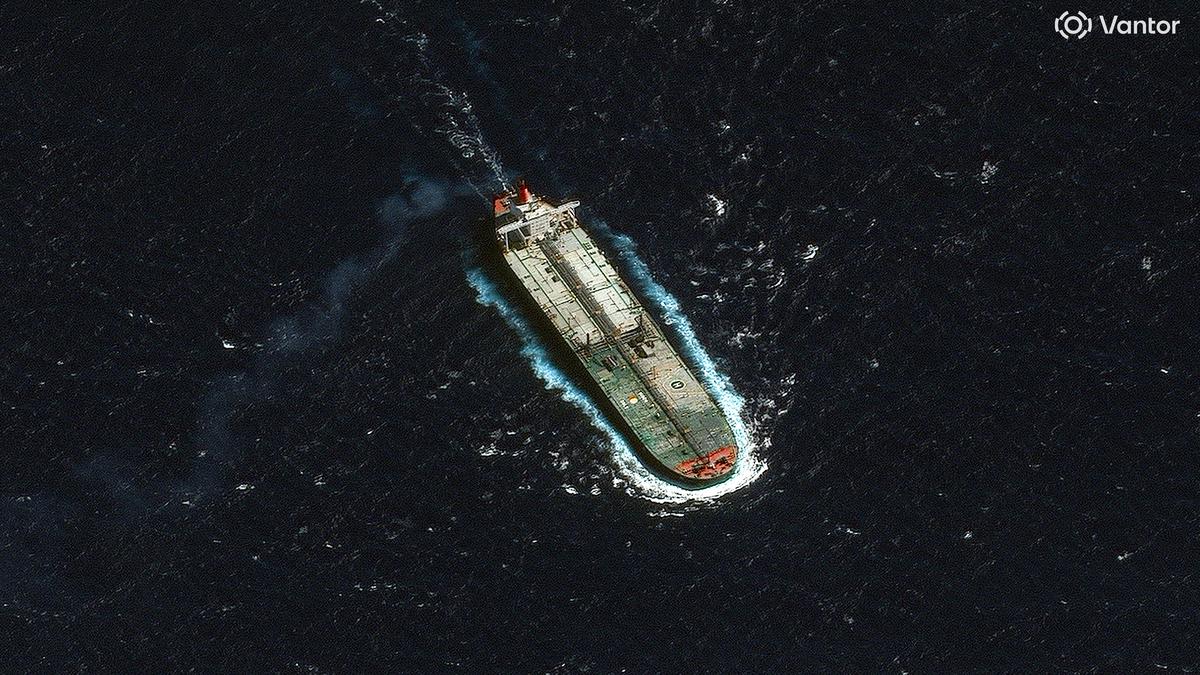
The Trump administration has seized two oil tankers of Venezuela so far
After announcing a naval blockade and seizing two oil tankers, the Donald Trump administration has now ordered U.S. military forces to focus on enforcing a ‘quarantine’ of Venezuelan oil for at least the next two months, amping up economic pressure on Caracas.
The impact of this imperialist step could worsen the already weak Venezuelan economy. But how did a petrostate with the most proven resources end up with a strained economy in the first place?
Venezuela has the largest proven reserves of crude oil in the world at 303 billion barrels (2023). Yet, it ranks much lower in the production and refining of oil. Most of its resources are extra-heavy crude oil, whose extraction and processing require specialised technology and refineries. However, internal issues and international sanctions have starved it of the capital required for this.
While the state-run oil company Petroleos de Venezuela, S.A. (PDVSA) owns and operates five refineries in Venezuela, it also suffers from years of underinvestment, mismanagement, and a lack of technical expertise.
Specifically, following a failed coup attempt in April 2002 and the subsequent general strike/oil lockout in December 2002-February 2003, the then President, Hugo Chavez, was forced to replace PDVSA’s management. Critics say this led to a bureaucratisation of the company.
In 2024, the country produced 9,21,000 barrels of crude oil per day, at least 56% lower than its production in the 1980s. In the 1970s, Venezuela benefited when oil prices soared due to the Yom Kippur War, and its per capita income became the highest in Latin America. It was then a largely unequal country.
However, the figure has only dwindled since 2014 following sanctions and the oil downturn. Venezuela’s GDP per capita in recent years, as shown in the chart below, has become almost similar to what it was three decades ago. No other country’s GDP per capita has slid to this extent in this period.
Consequently, despite being a founding member of the Organisation of the Petroleum Exporting Countries (OPEC), Venezuela has the highest general government gross debt compared to other OPEC members. The chart below shows the Gross government debt as a share of GDP (in %) for select OPEC countries
While others have steered through global oil price crashes, the country continues to reel under economic pressure. This points to the fact that the economic crisis in Venezuela cannot be attributed to global crude factors alone.
U.S. sanctions have played a major role in curbing the petroleum sector in Venezuela. The first Trump administration imposed sanctions in August 2017, prohibiting Caracas from accessing U.S. financial markets. It then imposed more sanctions in 2019, on PDVSA, preventing it from being paid for exports to the U.S.

The sanctions also froze PDVSA’s U.S. assets and disallowed the supply of diluents. There was some easing in 2023 under the Joe Biden regime, but sanctions were reinstated later, before the naval blockade imposed by the second Trump regime.
The slump can also partly be explained by the country’s lack of diversification. While many other OPEC countries have diversified to non-oil exports, Venezuela has failed to do so. As seen in the chart below, Venezuela has largely continued to rely on its mineral (oil) exports.
Despite Venezuela exporting mostly only oil, the country’s share in global exports of oil fell drastically due to these internal and external factors. The chart below shows the share of select countries’ share in global exports of crude oil over time. Venezuela formed over 4% of the global oil exports in the 1990s, second only to Saudi Arabia’s share. However, this dwindled to around 0.35% in 2023.
The data were sourced from the World Bank, the U.S. Energy Information Administration, OPEC reports and Harvard Atlas Lab
Published – December 30, 2025 08:00 am IST