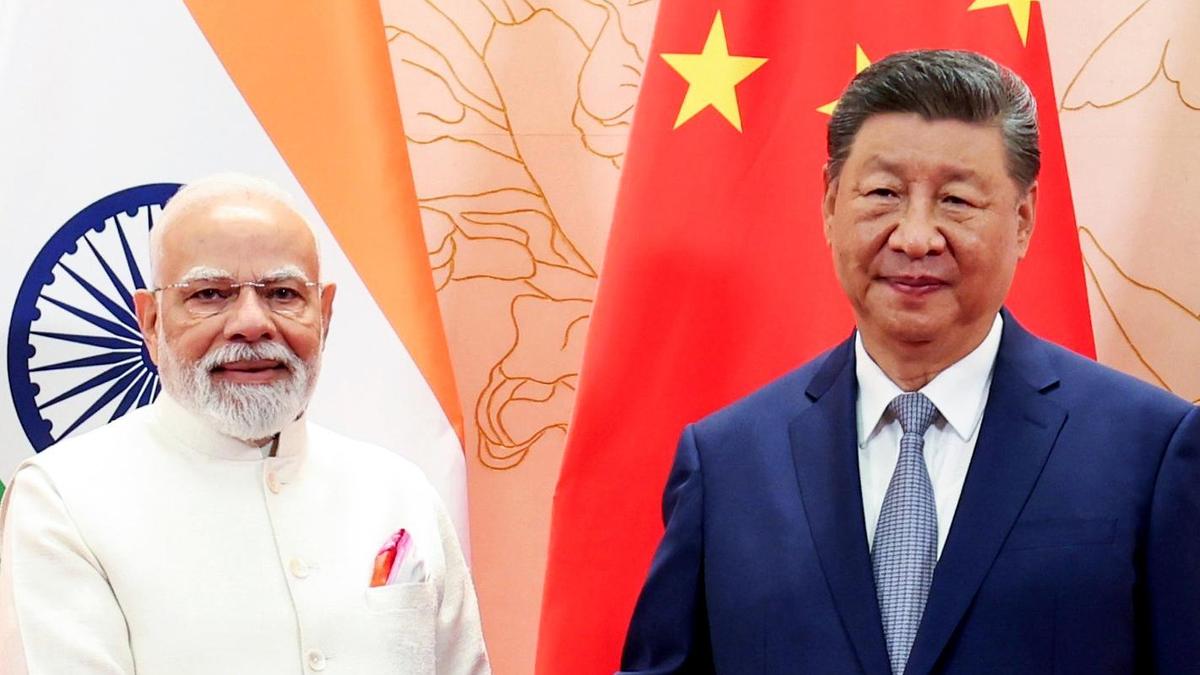
The Ministry of Finance is set to scrap curbs on Chinese firms bidding for government contracts, which were introduced in 2020. The curbs were imposed following a deadly clash between the countries’ troops in the Galwan Valley. They required Chinese bidders to register with an Indian government committee and obtain political and security clearances. According to Reuters, this resulted in China losing out on contracts worth $700-750 billion.
Notably, even during periods when India had a more favourable stance, direct Chinese investment remained low. China directly contributed less than 1% of India FDI equity inflows from 2000 to 2021, showing that recent curbs only add pressure.
The chart below shows China’s share and rank in India’s total FDI equity inflows from 2000 to 2025. The figure for 2000-2021 is cumulative
However, China’s cumulative (direct and indirect) FDI inflows before 2020 into India are difficult to calculate as they were mostly routed through tax havens, according to Santosh Pai, Partner at Denton’s Link Legal and Honorary Fellow, Institute of Chinese Studies. “Chinese investments almost never go directly into a country,” he told The Hindu.
These means of investments were wholly altered when the Indian government issued ‘Press Note 3’ in April 2020, which specifically stated that an entity of a country, which shares a land border with India, or where the beneficial owner is a citizen of any such country, requires mandatory approval from the Government of India before for an investment can be executed. Pai estimated that this dented any indirect investments that Chinese companies had slated for India.
A few years after this policy amendment, India’s Ministry of Finance, in its annual Economic Survey for 2023-24, suggested that increased FDI inflows from China can help increase India’s global supply chain participation and push exports. The Ministry took note of the U.S.’ and Europe’s shift away from sourcing imports directly from China. The U.S.’ total trade with China reduced in 2023 and remained stagnant in 2024 . The European Union also saw a similar dip in trade with China in 2023 (Chart 2B).
The chart below shows the U.S.’s total trade (including imports and exports) with China over the years (in $ bn)