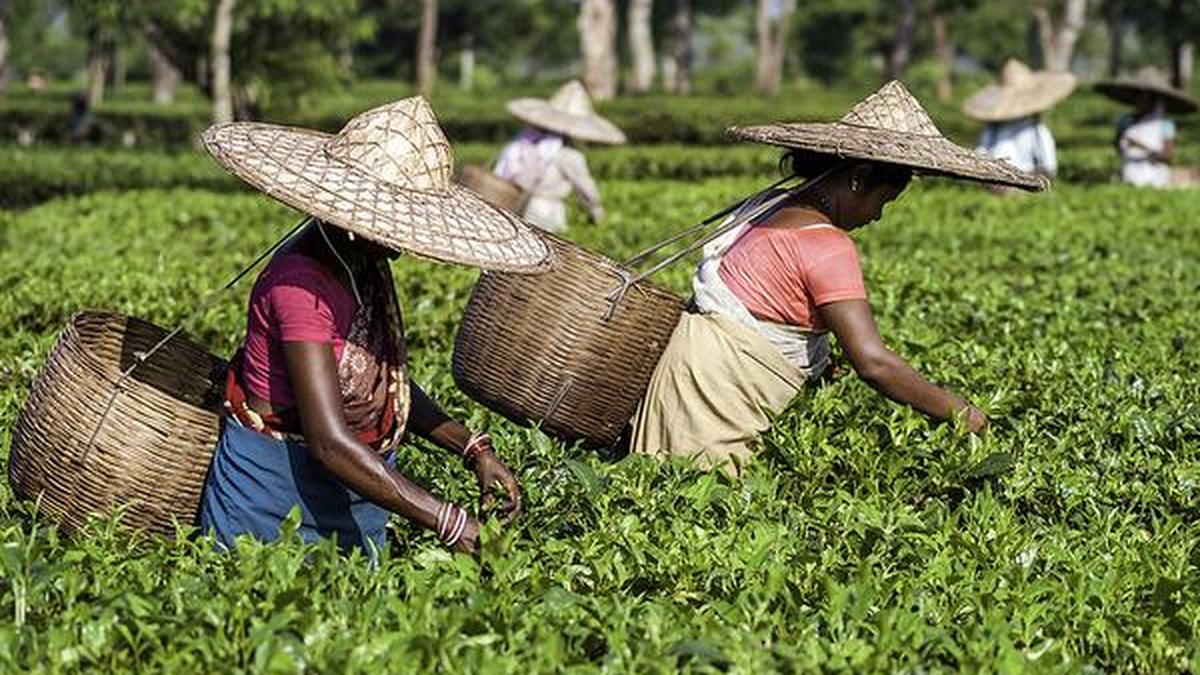
In rural areas, women participate at 34.6%, which is modest compared with men, yet reflective of their engagement in agriculture and household-related work.
| Photo Credit: DANIELRAO
The Periodic Labour Force Survey (PLFS) 2025, released by the Ministry of Statistics and Programme Implementation (MoS&PI) for January-December 2025, marks a significant methodological milestone. For the first time, the revamped PLFS covers both rural and urban India monthly — a departure from the earlier July-June urban-only quarterly cycle. It also offers the most granular all-India portrait of the labour market across urban and rural India in recent years.
India’s overall Labour Force Participation Rate (LFPR) for all ages stands at 44.9%, which means that around four in 10 Indians are either working or actively seeking work. The figure remains broadly stable at 44.7% in 2024. The chart below shows India’s LFPR in persons aged 15 and above over the years (in %).
Chart appears incomplete? Click to remove the AMP mode
In rural areas, women participate at 34.6%, which is modest compared with men, yet reflective of their engagement in agriculture and household-related work. However, in urban areas, women’s participation falls to just 22.2%. The challenge becomes even more acute among urban young women. In these urban centres, nearly two in 10 women are employed. Urban men, by contrast, participate at 59.7% — more than twice that rate. This gap points to persistent challenges within India’s urban labour market. The chart below shows the labour force participation rates by gender and location in 2025.
The youth unemployment rate for people aged 15-29 is 9.9%, more than three times the national average of 3.1%. For urban young women specifically, the rate is 18.9%, nearly one in five. These are not women outside the labour force, but women actively seeking work and unable to find it.
The PLFS makes this clear — the unemployment rate measures only those within the labour force, suggesting constraints in employment opportunities despite labour-force participation. The challenge becomes even more acute among urban young women. The chart below shows youth unemployment rate by gender and location for persons aged between 15 and 29.
Click here to subscribe to our Data newsletter
Educated and unemployed
Next, among persons aged 15 years and above with secondary schooling and more, the unemployment rate is 6.5% — more than double the national average. In urban areas, educated unemployment reaches 7.2%, whereas in rural areas it is 6%. This may indicate that rural educated workers are more likely to remain engaged in low-productivity subsistence activities rather than remain openly unemployed. Between 2022 and 2025, the overall unemployment rate has fallen from 3.6% to 3.1%, yet unemployment among the educated remains persistently elevated. The persistence of educated unemployment suggests that employment generation has not fully kept pace with the growth in the educated workforce. The chart below shows location-wise unemployment rate among educated persons and all persons (in %)
In rural areas, 70.7% of the working women are self-employed — a category that often reflects subsistence activity rather than entrepreneurial choice. In urban areas, 40.4% of working women are self-employed, reflecting a mix of entrepreneurial activity and informal work. Regular wage or salaried employment — often considered a marker of formal work — covers just 9.3% of rural working women, while another 20% are engaged as casual labourers. Urban areas offer a relatively better distribution, with 50.9% of working women in regular wage employment. The chart below shows employment type among women workers (in %).
The Worker Population Ratio for all persons has climbed from 39.7% in 2022 to 43.5% in 2025. More Indians are working, and more women are entering the labour force, particularly in rural areas where the female WPR rose from 26.9% to 33.8% over the same period. The chart below shows India’s worker population ratio over the years across all ages (in %)
The writer is an Indian Statistical Service Officer serving as Joint Director in MoS&PI. The views expressed are personal
Read more:Wages of Indian workers have remained almost same in last 10 years: Data
Published – May 23, 2026 07:00 am IST