Welcome back data enthusiasts,
Over the last two weeks, as the world saw a war unfold, the Hindu data team has been looking at how big events prop up big confusing numbers and what the underlying story is. While it’s our job on any given day to make sense of numbers and find patterns that tell stories, war and conflict makes doing that even more urgent.
The Russia-Ukraine war which began with Russia’s invasion of Ukraine on February 24, 2022 entered its fourth year and is showing no signs of ending despite numerous rounds of peace talks.
We looked at the conflict through the lens of post-war reconstruction in Ukraine, which is estimated to cost $558 billion, or nearly three times the country’s GDP, over the next decade.
In both countries, the war, predictably, has taken a toll on daily lives. Consumer price inflation in both countries surged to a six-year high at the outset of the war in 2022. It has remained persistently elevated in the years since. For instance, in Russia, inflation surged to 14% in 2022, moderated to 5% in 2023, but subsequently increased to 9% in the last year.
Click here to read about the scenario.
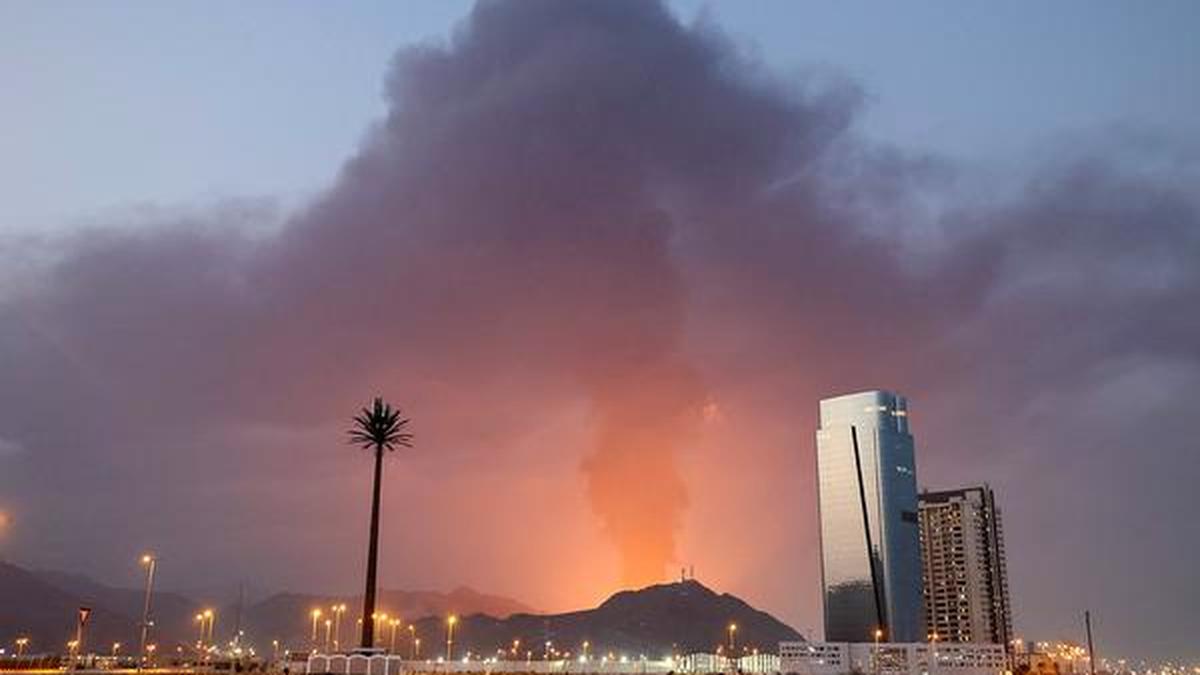
Meanwhile over in West Asia, the last week has been one of extreme upheaval, including the use of the first torpedo launched from a U.S. submarine since World War II.
To help understand the U.S-Israel versus Iran war, we broke down how it’s affecting global fuel trade and the millions of Indian migrant workers caught in the crossfire. You can read it here.
By Monday, oil prices had soared to $78.31, almost 12% higher than a week before, and have continued to rise since, breaching $80 a barrel.
The region at war matters is its role in global oil supply. West Asia accounts for 31% of global oil production and 38% of exports, with about 20% of the world’s oil passing through the Strait of Hormuz, a narrow but critical chokepoint.
Around 14 million barrels of crude oil and petroleum move through the strait each day, meaning disruptions quickly ripple across global markets. China alone imports millions of barrels via this route and has been stockpiling oil, building inventories of roughly 1.2 billion barrels. The Strait’s closure can have detrimental effects if it persists.
Meanwhile, for India, the consequences of a prolonged conflict in West Asia may go beyond immediate evacuations or energy markets. The region hosts millions of Indian workers, and instability affects their livelihoods and remittances they send home each year.
Between 2021 and 2025, more than 17 lakh Indians received emigration clearances to work in Gulf countries, with Saudi Arabia accounting for 41% and the UAE 24%. These flows translate directly into India’s foreign exchange. The UAE alone contributed 19.2% of India’s inward remittances in 2023-24, second only to the U.S.. Much of this money flows to States such as Maharashtra, Kerala and Tamil Nadu, highlighting how conflict in West Asia can ripple into household incomes across India. Read about it here.
Wars are often exclusively narrated through commentary on geopolitics, strategy, and military movements. But, numbers show how conflicts ripple through food prices, energy markets, migration flows and household incomes, often long before the geopolitical outcome of war becomes clear.
A spike in oil prices and a shift in remittance flows reveals the position India holds in the global economy. For the data team, this is a key challenge — translating large, abstract datasets into stories that explain how global events shape people’s daily lives.
Here are this week’s News in Numbers
$2.93 billion
Estimated weekly damage to the Israeli economy from Iran war
Damage to Israel’s economy from the air war with Iran could reach more than 9 billion shekels ($2.93 billion) a week, the Finance Ministry said on Wednesday. Under current “”red”” restrictions by Israel’s Home Front Command that limit travelling to work and school closings, along with callups to the reserves, economic loss is estimated at 9.4 billion shekels.
Source: Reuters
7,667
Migrant deaths or missing cases recorded on global routes in 2025
At least 7,667 people died or went missing on migration routes worldwide in 2025, according to the International Organization for Migration. The UN agency warned the real toll is likely higher due to funding cuts and reduced tracking. Sea routes such as the Mediterranean remain among the deadliest with at least 2,108 people dead or missing and 1,047 on the Atlantic route to Spain’s Canary Islands, the agency said.
Source: Reuters
1.9 million
Number of displaced persons in South Sudan at risk due to funding gaps
The lives of more than 1.9 million displaced people in South Sudan are being put at risk due to aid funding shortages, the UN’s migration agency said Wednesday. The International Organization for Migration (IOM) said humanitarian needs were dramatically outstripping resources in one of the world’s most displacement-affected countries. South Sudan, the world’s newest sovereign country, has been beset by civil war, poverty and massive corruption since it was formed in 2011.
Source: AFP
To subsribe to the Data Point newsletter, click here.
Published – March 05, 2026 07:20 pm IST